Was were in the past simple form?
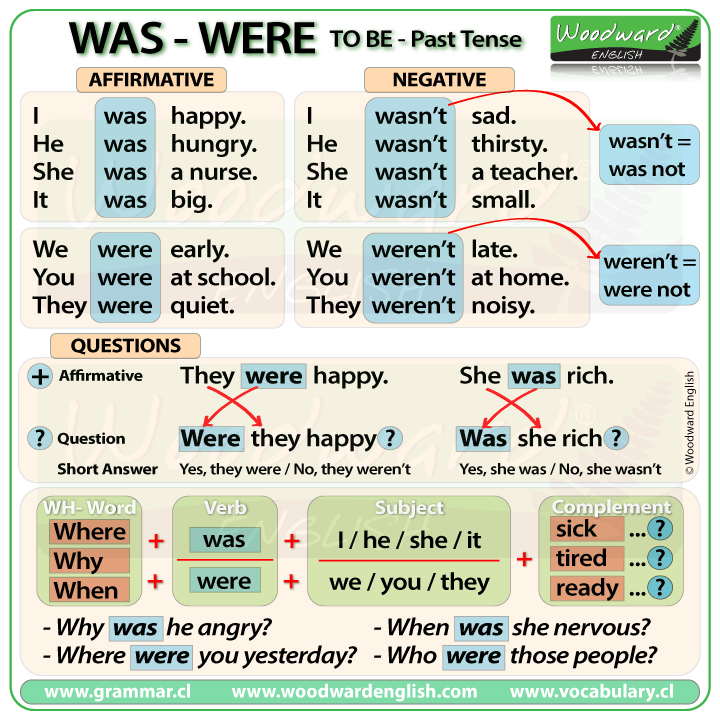
Chances are, you're already perfectly familiar with the main difference between was and were: They're both simple past tense forms of the verb to be, but was is singular and were is plural, except for in the second-person singular (“you were”).
Is were a simple past?
We use was/were as the past simple forms of be. We use was for I/he/she/it and were for you/we/they.
What type of past is were?
When to use were. Whereas was is the singular past tense of to be, were is used for both the third person plural past tense (they and we) and the second person past tense (you).
Was were past simple or continuous?
We make the past continuous with was or were and the -ing form of the verb.
They’re both simple past tense forms of the verb to be, but was is singular and were is plural, except for in the second-person singular (“you were”).
Both “was” and “were” can be used as the past tense of “to be,” but they are not interchangeable. Was is used for the first-person singular ( …
We use was/were in the expression was/were born. The expression be born is always past (NOT present): was/were born.
Past simple – verb ‘to be’ ; was · How to use it. Use was for I, he, she and it. Use were for you, we and they. ; I was · For negatives, use not. We can contract …
“Only “was” is correct (with the subjects “I/he/she/it”) if you’re talking about something that actually might have been true in the past.